thomas
deckker
architect
critical reflections
Did Lucio Costa like Greyhound Buses?
2026
2026


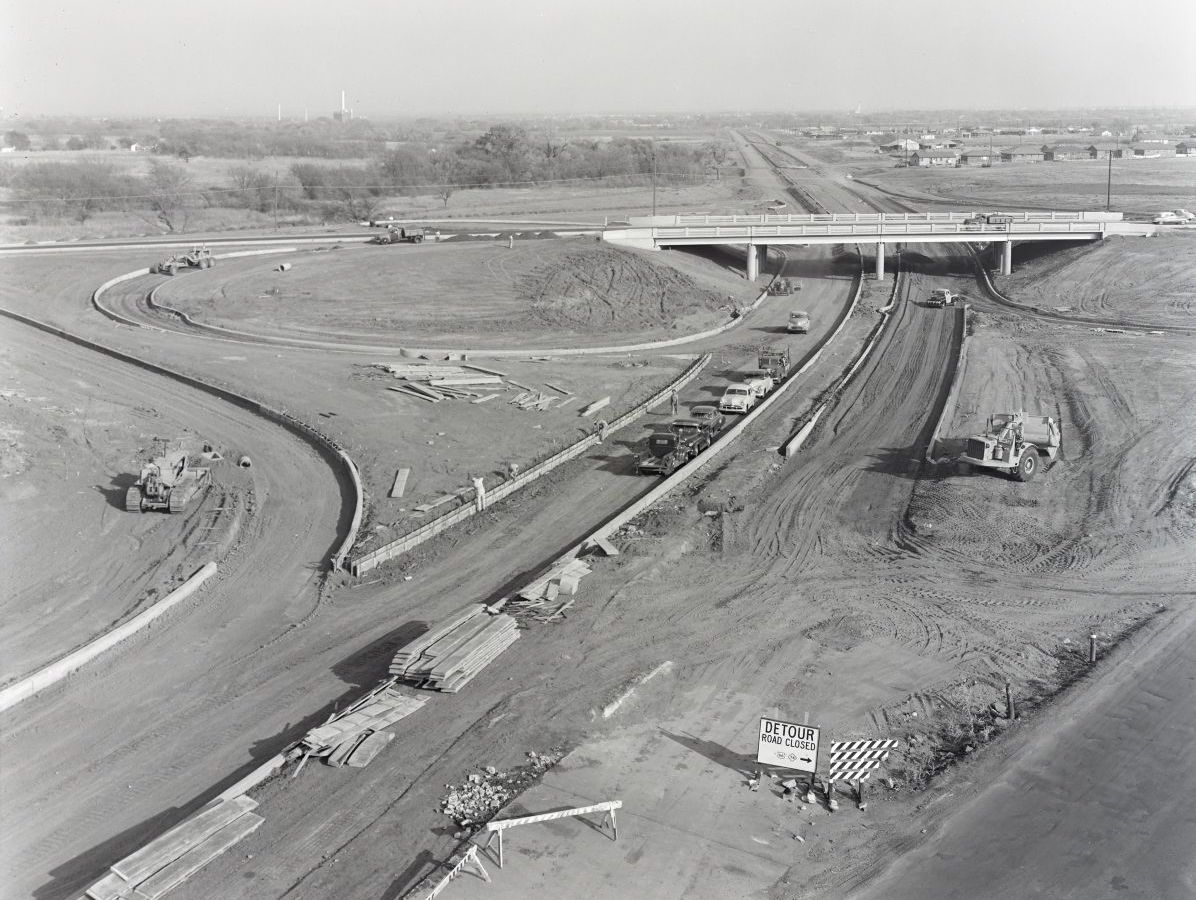
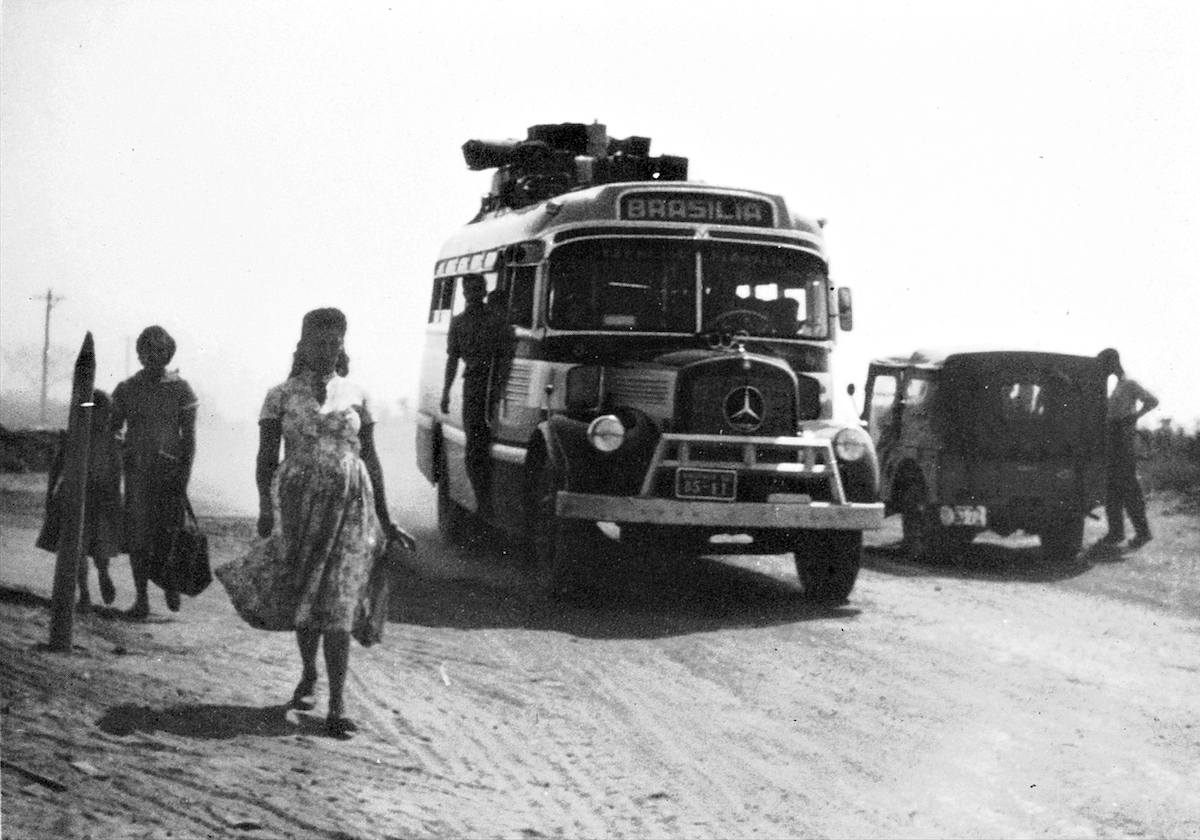
Pioneers arriving in Brasília. Archive Photo c. 1958
Did Lucio Costa like Greyhound Buses?
This article is an edited extract from an article prepared for the Brazil Institute, Kings College London on the history of Brasília. It follows numerous publications and talks on the BBC about Brasília.
The short answer is yes. We know this because in his recollections on how he came to design the city of Brasília - "Ingredientes" da concepção urbanistica de Brasília - Lucio Costa wrote:
A circunstância de ter sido convidado a participar, com minhas filhas, dos festejos comemorativos da Parsons School of Design de Nova York e de poder então percorrer de "Greyhound" as auto-estradas e os belos viadutos-padrão de travessia nos arredores da cidade. [1]
which could be translated as:
The circumstance of having been invited to participate, with my daughters, in the commemorative celebrations for the Parsons School of Design in New York and having been able to wander around by "Greyhound" on the parkways and beautiful viaducts on the outskirts of the city.
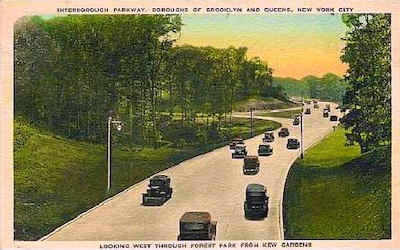
Interborough Parkway, New York City
postcard before 1933
postcard before 1933
The Interborough Parkway was originally designed by the notable landscape architect Frederick Law Olmsted, but was radically enhanced and extended by Robert Moses, Parks Commissioner for New York City, with Federal funds, as part of the New Deal, after 1933.
The parkways and viaducts around New York City were of course the work of Robert Moses, Parks Commissioner for the city. Moses had begun building roads in New York City in 1924, and a flood of New Deal money enabled the transformation of the network in 1933. Public opposition to Moses brought his downfall in 1960, in part, according to Owen D. Gutfreund, because his proposals moved from city edges to developed areas. Costa therefore saw Moses and his freeways at an opportune moment during his visit to New York City in 1956, and before road building schemes pushed cities over the tipping point of sustainability and destroyed their cores in favour of suburbs. [2]
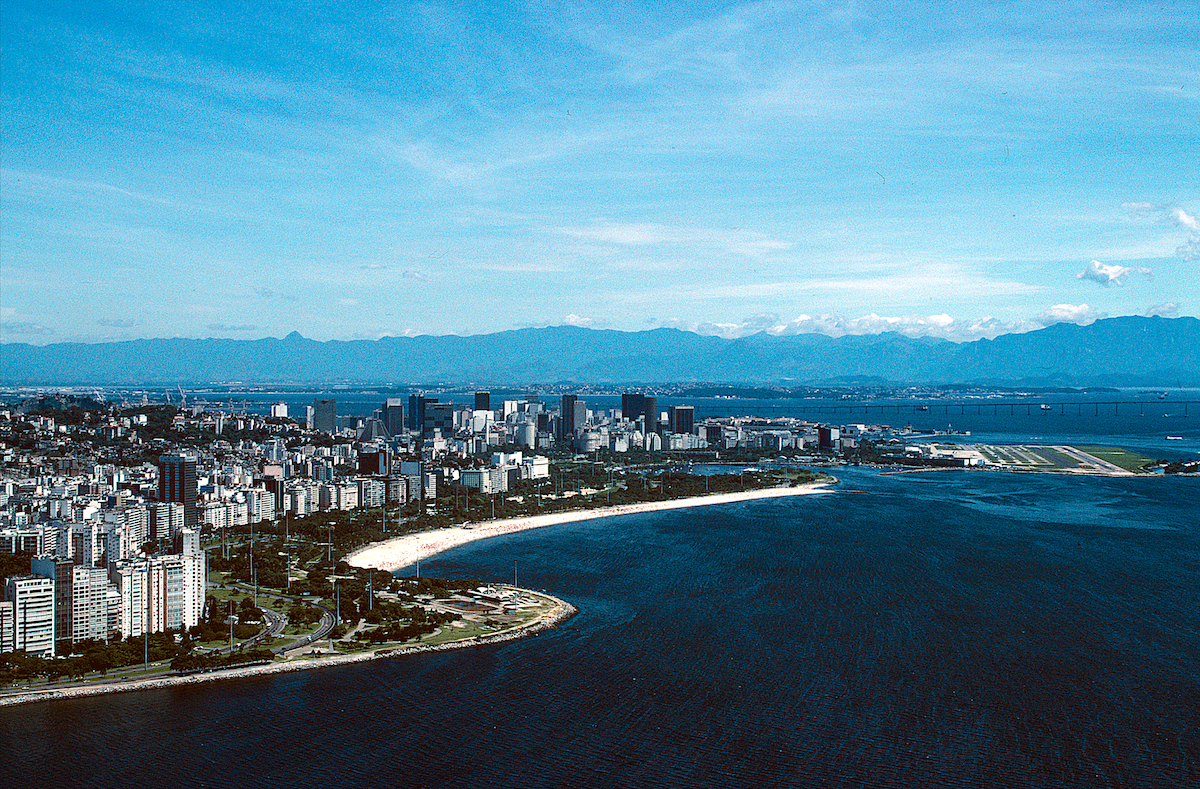
The aterro from Flamengo to the Enseada da Glória, with Catete behind, Rio de Janeiro
photo Thomas Deckker 1988
photo Thomas Deckker 1988
We know that Moses was highly regarded in Brazil in the 1950s: the aterro in Rio de Janeiro, infill along the beaches into the Bay of Guanabara, was likely based on the Shore Parkway (1937-40), which ran around the coastline of Brooklyn at the mouth of New York City harbour. In the aterro a dual-lane road wrapped around the beaches from the city centre to Botafogo, the last beach before the open Atlantic, and relieved traffic from the congested roads of the central districts such as Catete, where the presidential residence was located. Some parts of the aterro, such as the Praia da Flamengo and the famous gardens of the Museum of Modern Art (Affonso Eduardo Reidy, 1954-60), were designed by the landscape architect Roberto Burle Marx; others provided provided much-needed public facilities. Sir William Holford, Chairman of the judging panel for the Brasília competition in 1956, cited the terrible congestion in Rio de Janeiro as the first reason for the construction of a new capital. [3]
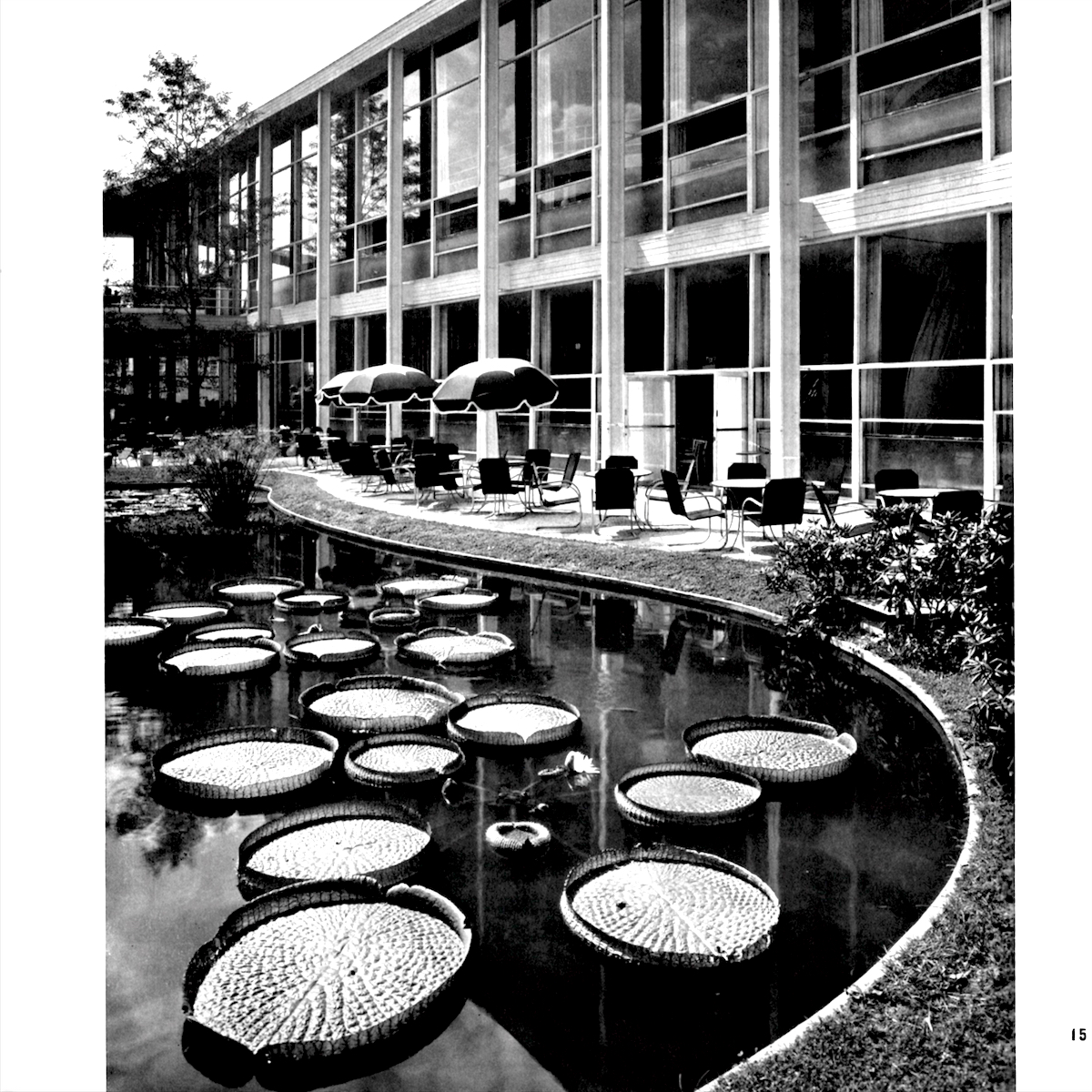
Lucio Costa and Oscar Niemeyer: Brazilian Pavilion at the New York Worlds Fair, 1939 from Stamo Papadaki: The Works of Oscar Niemeyer (Chicago: Reinhold 1950)
The Brazilian Pavilion was a great success among the architectural fraternity in New York City at the time and brought great acclaim to Costa and Niemeyer.
Costa had 2 revelatory experiences - epiphanies really - in New York City. The first was in 1939, when he and Oscar Niemeyer went to supervise the construction of the Brazilian Pavilion at the New York Worlds Fair.
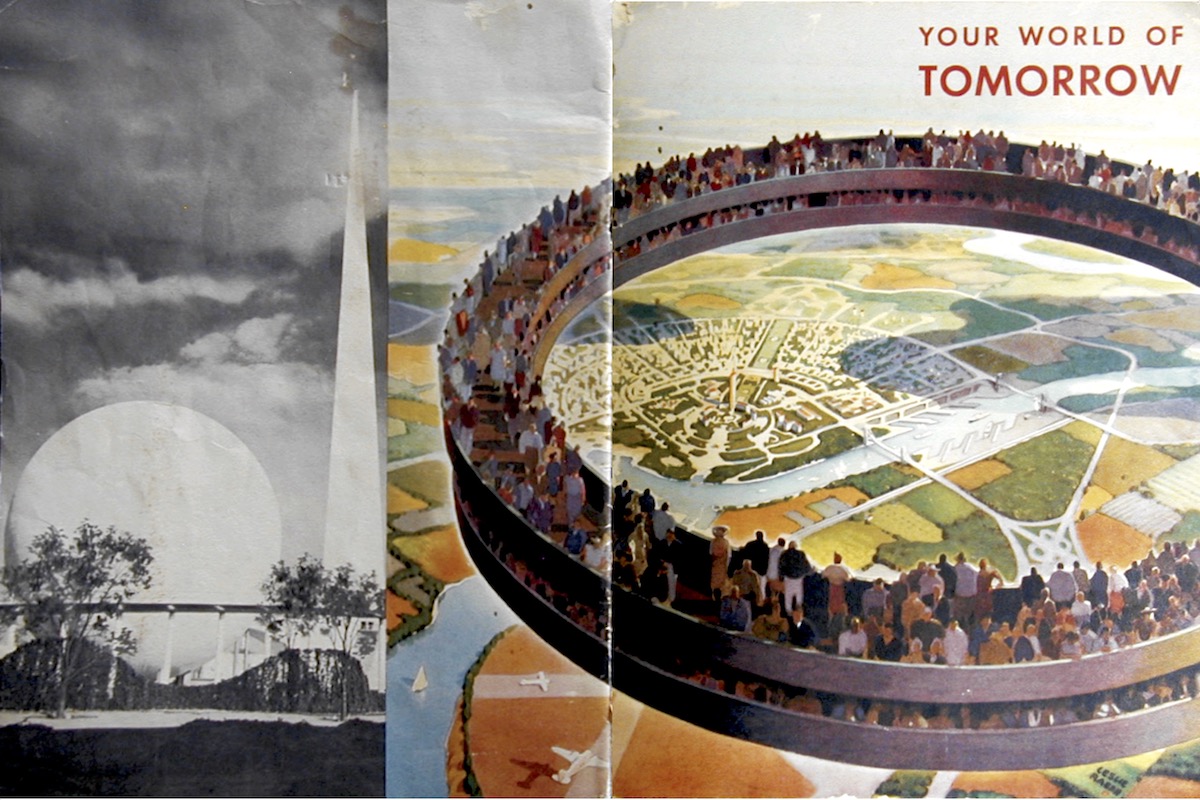
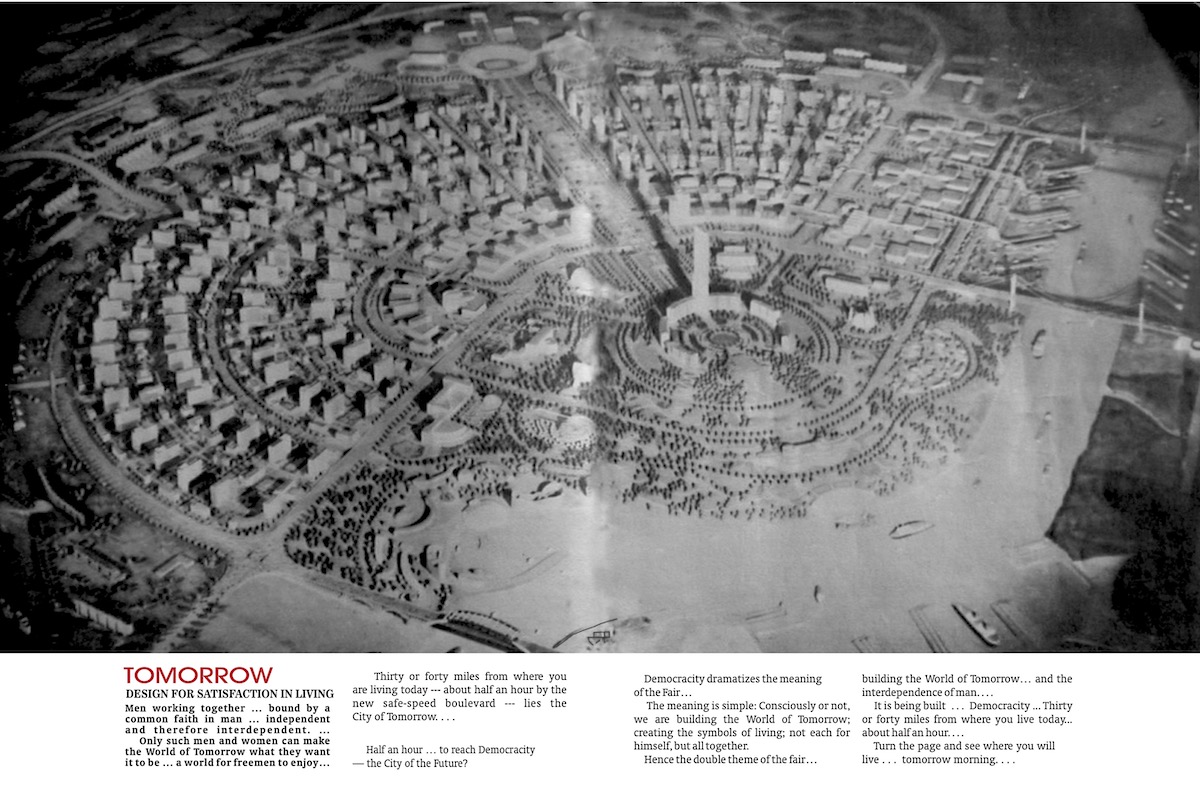
Democracity, New York World Fair. Souvenir guide, 1939.
Democracity was the official pavilion of the city of New York and designed by Wallace K. Harrison. Note the double rows of apartment buildings on either side of a parkway, linked by smaller local roads.
The two most popular exhibitions at the New York Worlds Fair were Futurama and Democracity, both visions of the ideal future city. Futurama was sponsored by General Motors and designed by Norman Bel Geddes, the foremost designer for industry at the time. Democracity was the official pavilion of New York City and was designed by Wallace K. Harrison, related by marriage to the Rockefeller family and an architect on the design team for the Rockefeller Center (1931-39). The planned urban environment was a central and celebrated theme of the Fair. According to Greg Hise, the critic and theorist Lewis Mumford and the architects Henry Wright, Robert Kohn and Albert Mayer, all visionary planners, played important roles in the broad outline of the fair:
[Lewis] Mumford argued that the overarching theme should emphasis the story of 'this planned environment, this planned industry, this planned civilization. If we can inject that notion as a basic notion of the Fair, if we can point towards the future, towards something that is progressing and growing in every department of life and throughout civilization... we may lay the foundation for a pattern of life which would have enormous impact in time to come'. [4]
The United States was well placed to dream of the future in 1939. The United States had recovered from the Depression and had achieved a wealthy and stable economy under President Franklin D. Roosevelt and his New Deal policies. The various organisations created as part of the New Deal had sponsored works of art and architecture of outstanding quality, in marked contrast to contemporary state-sponsored programmes in the Soviet Union and the Third Reich. Furthermore these works were all recognisably Modern, that is the American version of Modern exemplified by the Rockefeller Centre rather than European Modernism. As Alexander J. Field noted:
The 1939-1940 New York World's Fair took place within the shadow of the Second World War, but it was a paean to modernism, a hopeful celebration of technological and human potentials as the United States emerged from a decade of double-digit unemployment. The most popular exhibit was General Motors's Futurama, designed by Norman Bel Geddes, the patron saint of modernism's aerodynamic aesthetic. Visitors lined up for hours for an opportunity to gaze at vistas of modern infrastructure with cars moving along fourteen-lane freeways. From everything we can tell, it appears that Americans contemplated these vistas with a complete lack of any kind of distancing or ironic sensibility. They had seen enough on the ground already to understand that Bel Geddes's vision of the United States in 1960 would not, by and large, be science fiction. [5]
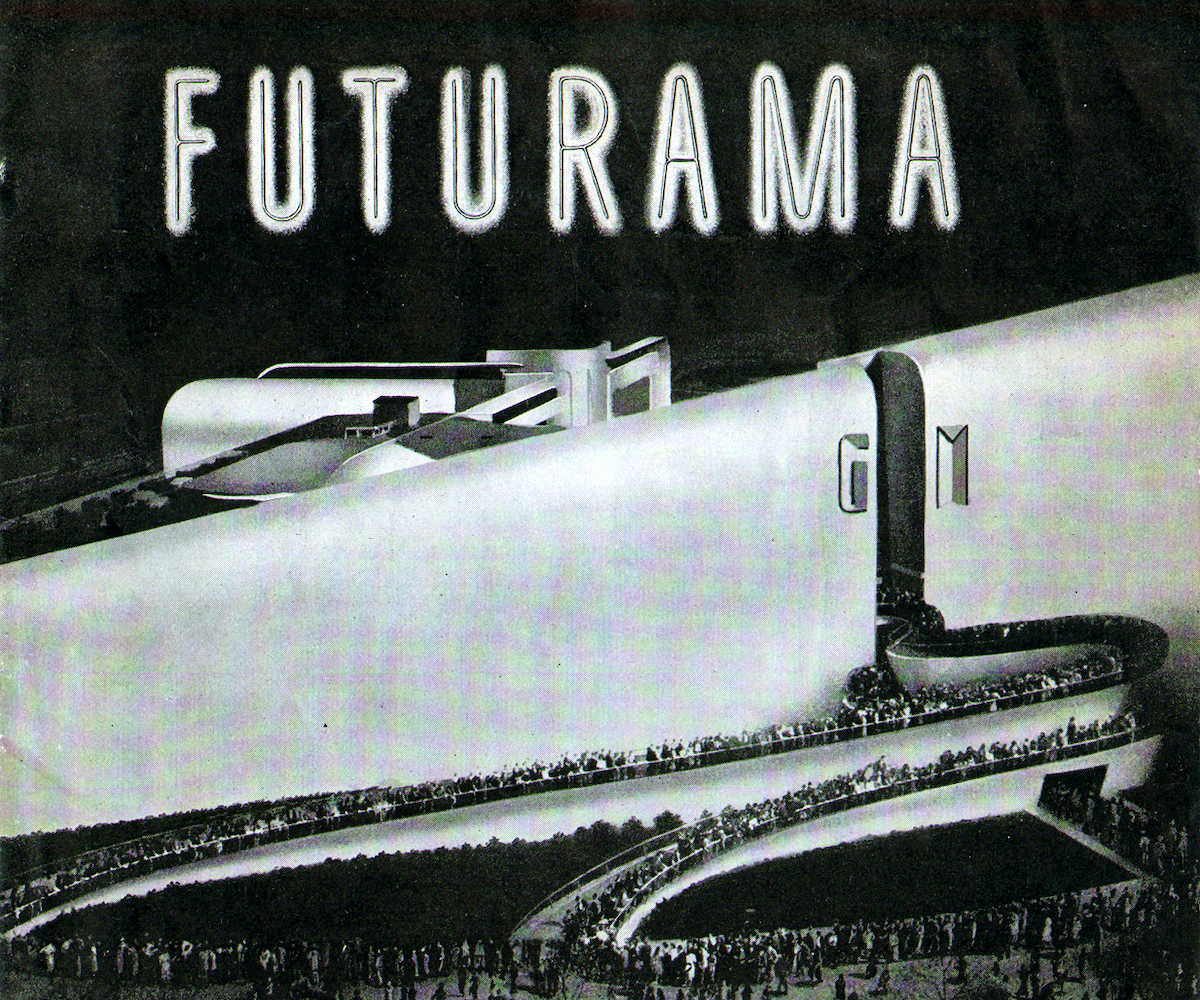
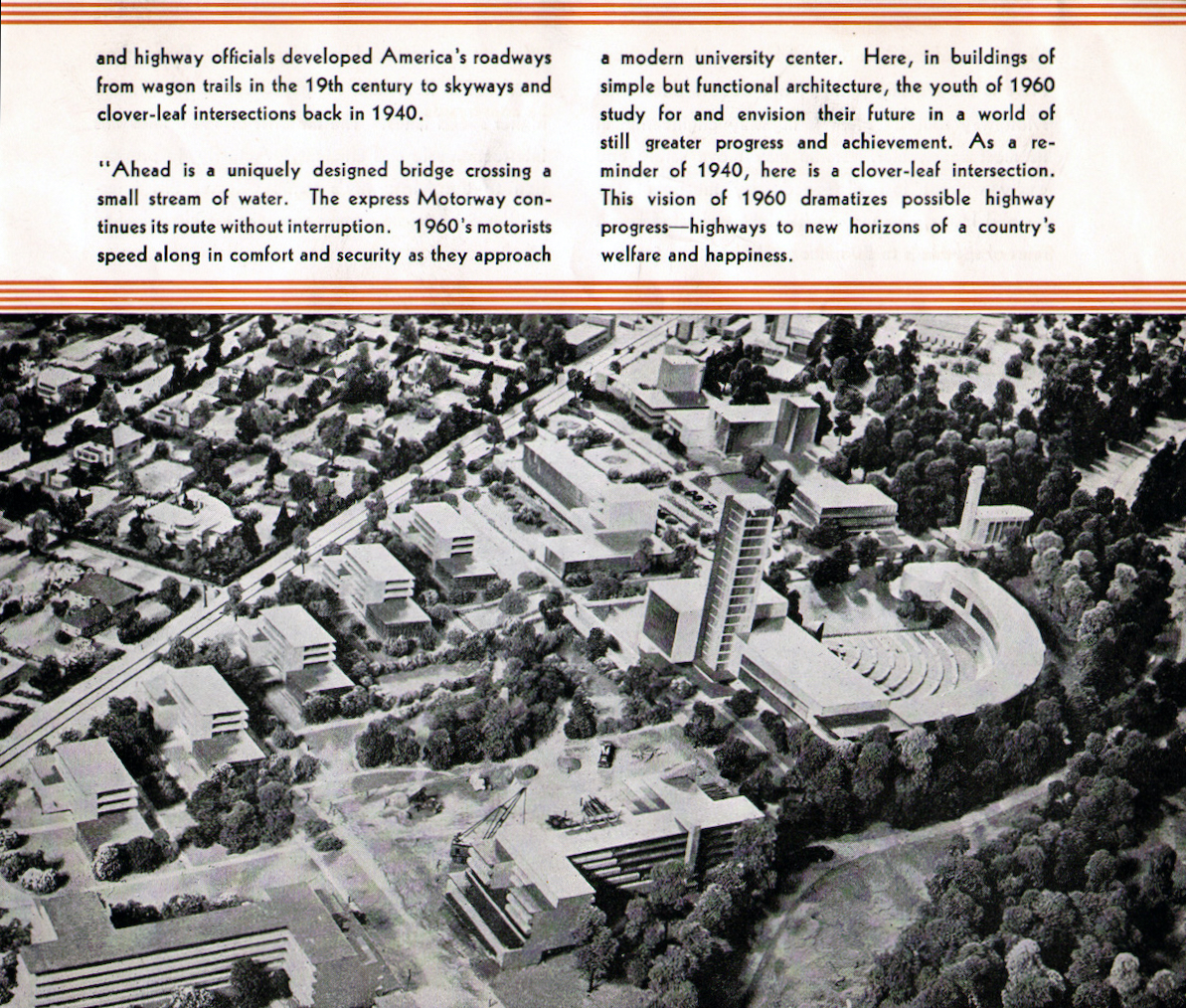
Futurama, New York World Fair. Souvenir guide, 1939.
The enormous queues were a feature of Futurama. The ideal city in 1939 comprised both apartment buildings and individual houses.
It might seem to an interested observer, such as Lucio Costa, that legislation like the 1937 Wagner-Steagall Housing Act, which established public housing in the United States, signified the official acceptance of planning (however ineffective in practice). The Wagner-Steagall Housing Act was a major triumph for the housing activist Catherine Bauer who had just published Modern Housing in 1934. Bauer, in Modern Housing, charted the evolution of European housing estates from perimeter blocks to free-standing blocks in parkland, such as the Siemensstadt Siedlung in Berlin. She referred to all such estates as super-blocks, the first official use of this term, and one easy to translate into Portuguese, the language of Brazil, as superquadras. [6].
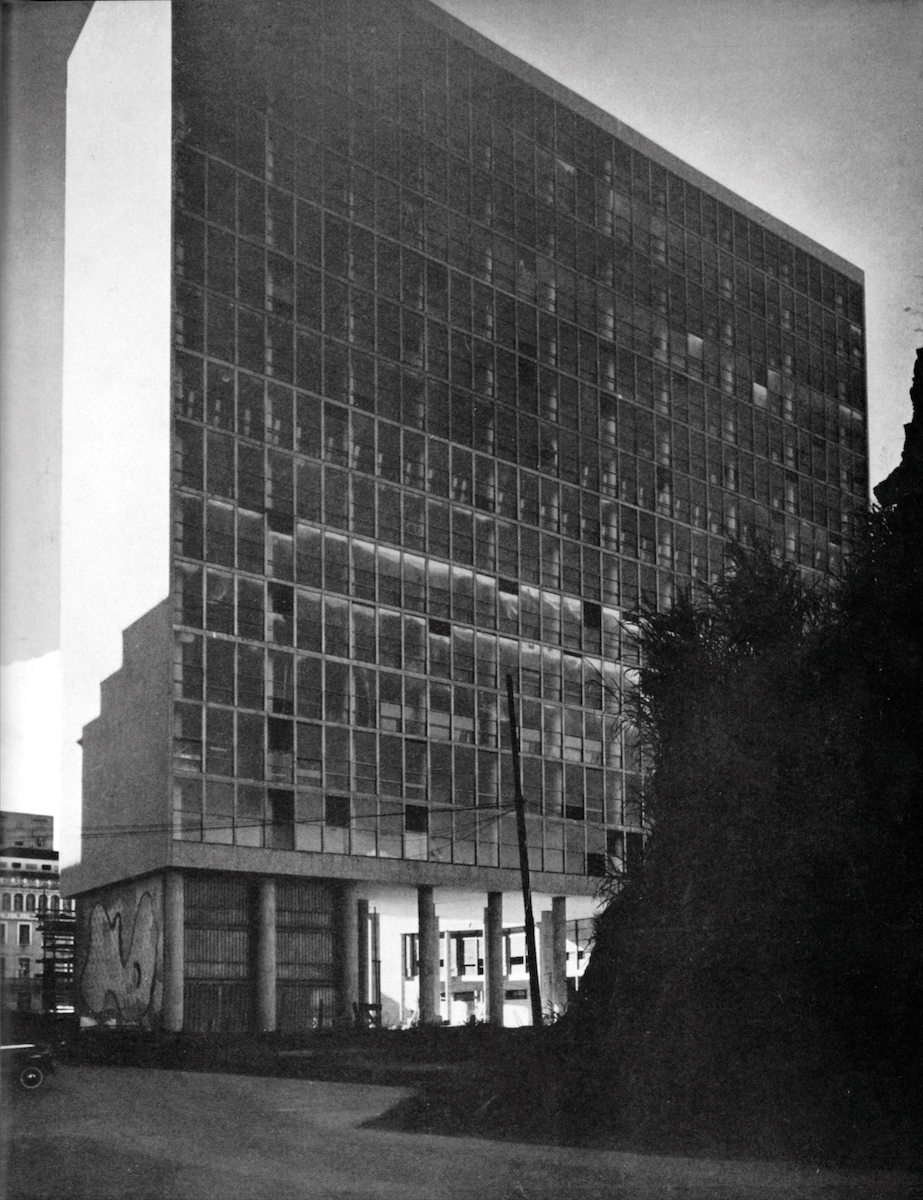
Lucio Costa and Oscar Niemeyer: Ministry of Education Building, Rio de Janeiro (1936-42) from Philip Goodwin: Brazil Builds (New York: Museum of Modern Art 1943). Photograph by G. E. Kidder Smith.
Oscar Niemeyer was acknowledged as the actual designer of the building and rocketed to international fame as a result.
Costa and Niemeyer certainly met at least some of the leading figures in architecture and planning during their visit. They may have met Robert Moses, who was responsible for the site of the Worlds Fair at Flushing Meadow and the Grand Central Parkway that gave access to it from Manhattan. They certainly met Wallace K. Harrison, executive architect of Democracity, as he later invited Niemeyer to participate in the team of consultants for the United Nations Secretariat Building in 1948, which had been sponsored by the Rockefeller family. They almost certainly met the rising star Eero Saarinen, assistant to Norman Bel Geddes on the Futurama pavilion, although the significance of this was not to become apparent until later. They did not meet Philip Goodwin, a director of, and architect to, the Museum of Modern Art, New York, however, but his recognition of the importance of Niemeyer led to the 'Brazil Builds' exhibition at the Museum in 1943 and book.
Lucio Costa's second visit to New York City was 17 years later, in 1956. When the competition for the city of Brasília was announced in 1956, he was attending the 60th anniversary celebrations of the founding of the Parsons School of Design. New York City was then at the peak of urbanity, what Michael Johns calls the "Moment of Grace" of North American urbanism:
Moment of Grace tells the story of the American city in its remarkable heyday. Never before or after the 1950s were downtowns so exciting, neighborhoods so settled, or suburban dwellers so optimistic. Urban culture was at its peak: it was vital, urbane, conformist, and generating rebellion all at once. [7]
New York City was very different to the city today. It was one of, and possibility the preeminent, centre for culture in the world, including art - Abstract Expressionism, music - jazz, and fashion - the distinctly American form of couture then known as 'sportswear'. Equally importantly, it was a centre of industry, of design and manufacturing. There was a reciprocal and fertile relationship between 'workers' and 'professionals', both contributing to and benefiting from the economic and social dynamism of the city. Housing reform had been implemented in new towns such a Radburn, New Jersey and the Wagner-Steagall Housing Act seemd to imply it would become Federal policy. It was an ideal model for any city, although it was not to last.
Clarence Stein: Towards New Towns for America 1951
The flagship project illustrated here was Greenbelt, Maryland, one of three greenbelt towns envisioned by Rexford Guy Tugwell, friend and advisor to President Franklin D. Roosevelt, and created under the Resettlement Administration, a New Deal programme, in 1935.
The flagship project illustrated here was Greenbelt, Maryland, one of three greenbelt towns envisioned by Rexford Guy Tugwell, friend and advisor to President Franklin D. Roosevelt, and created under the Resettlement Administration, a New Deal programme, in 1935.
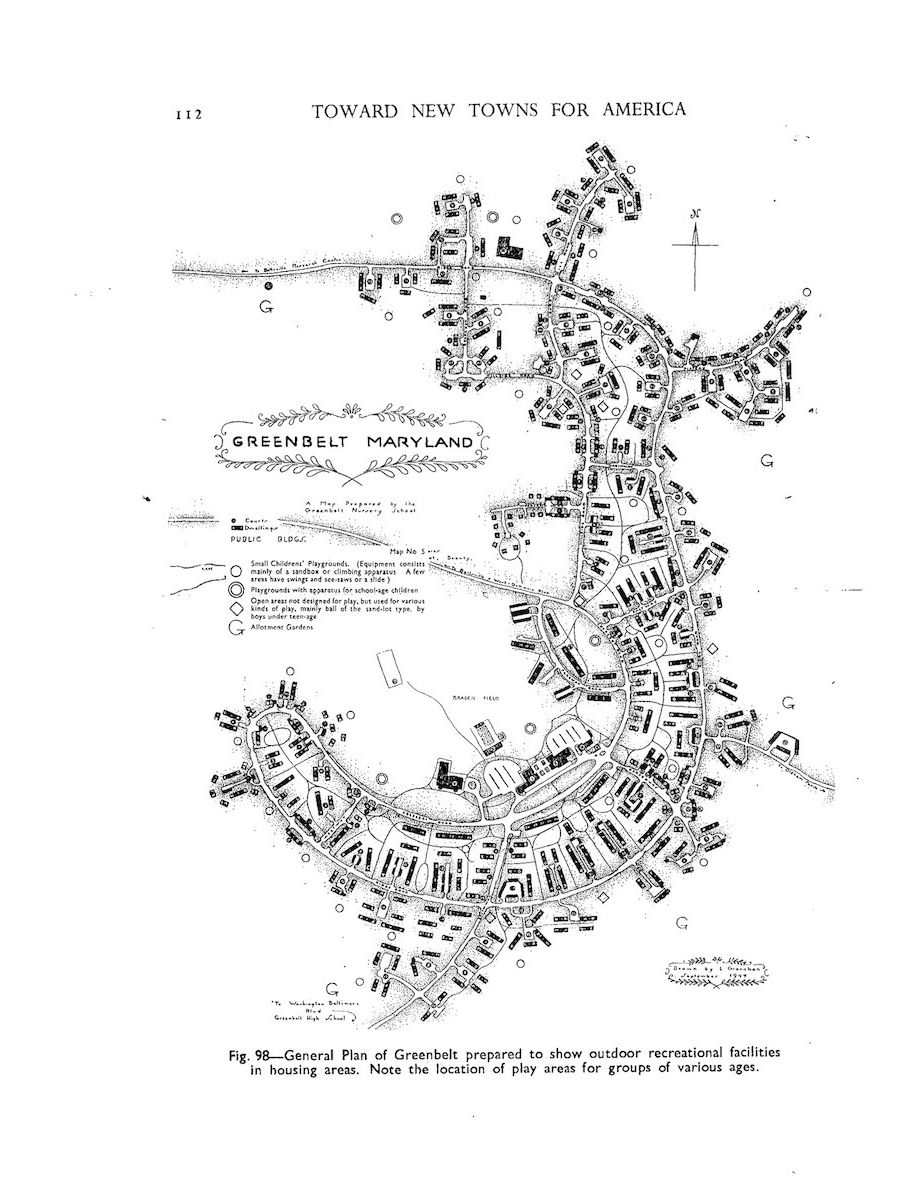
Clarence Stein: Towards New Towns for America 1951
Greenbelt, Maryland
Stein thought of urban planning almost entirely as forming communities. Compared to European housing, or WWII Defence housing, Greenbelt was quite conservative aesthetically. He illustrated it, however, with photographs of schools, children playing and family activities appropriate to life in the United States at that time, much as Norma Evenson had done in Two Brazilian Capitals for the first few years of Brasília.
Greenbelt, Maryland
Stein thought of urban planning almost entirely as forming communities. Compared to European housing, or WWII Defence housing, Greenbelt was quite conservative aesthetically. He illustrated it, however, with photographs of schools, children playing and family activities appropriate to life in the United States at that time, much as Norma Evenson had done in Two Brazilian Capitals for the first few years of Brasília.
Although planned urban environments had in reality been swept away in the popular movement for individual suburban houses as a result of the G.I. Bill, the activist Clarence Stein continued to publish on this subject. His Towards New Towns for America was published in 1951. While there is no evidence Costa saw it, the superquadras form neighbourhood super-blocks similar to those proposed by Stein.
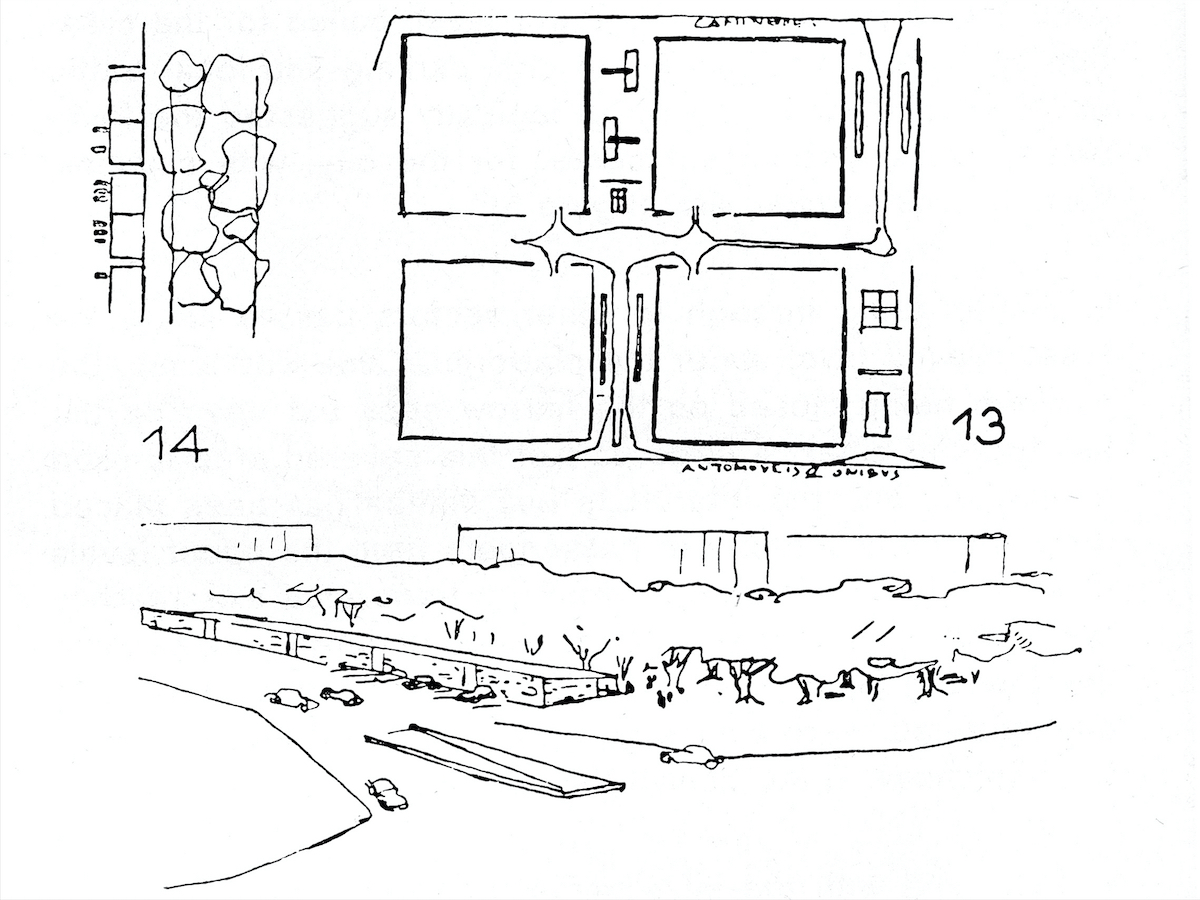
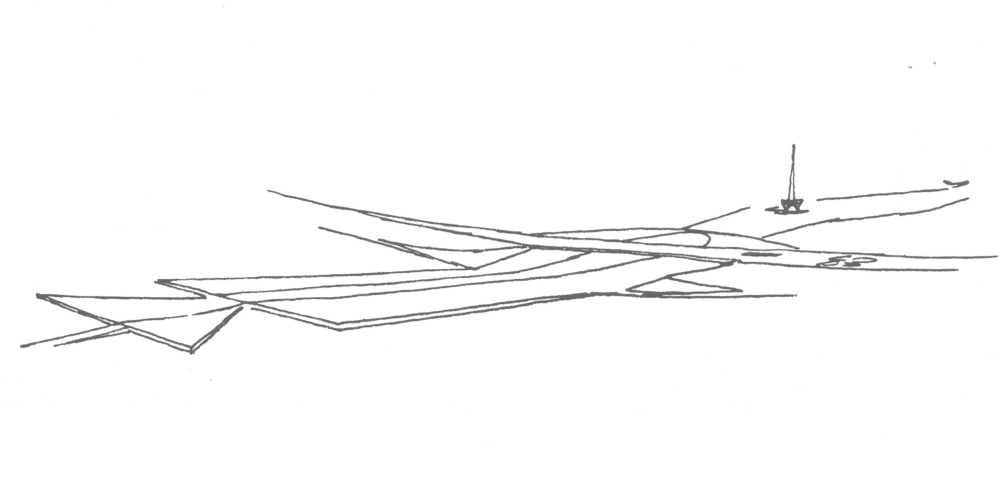
Lucio Costa: Competition sketch for the superquadras, Brasília 1956.
This sheet from the competition entry showa a set of superquadras with a local shopping centre and an institutional building, perhaps a school. Note the roads which give access to, but do not cross, the superquadras.
In Brasília the urban blocks form neighbourhood units with a local shopping street on one side and an institution such as school or church on the other. The original six superquadras, the only ones built at inauguration, clearly comprise a neighbourhood unit, with the famous Cine Brasília and Igrejinha.
Costa saw New York City at the peak of influence of Robert Moses, and only a few months after the inauguration of Eero Saarinen's GM Technical Center in Warren, Michigan and the passing of the Federal-Aid Highway Act. Both were extraordinarily important for urban planning in the United States. It is no wonder that the Memorial Descritiva is full of details of traffic. Costa set out the importance of roads early on in his competition entry:
To apply to the technique of town planning the free principles of highway engineering. [8]
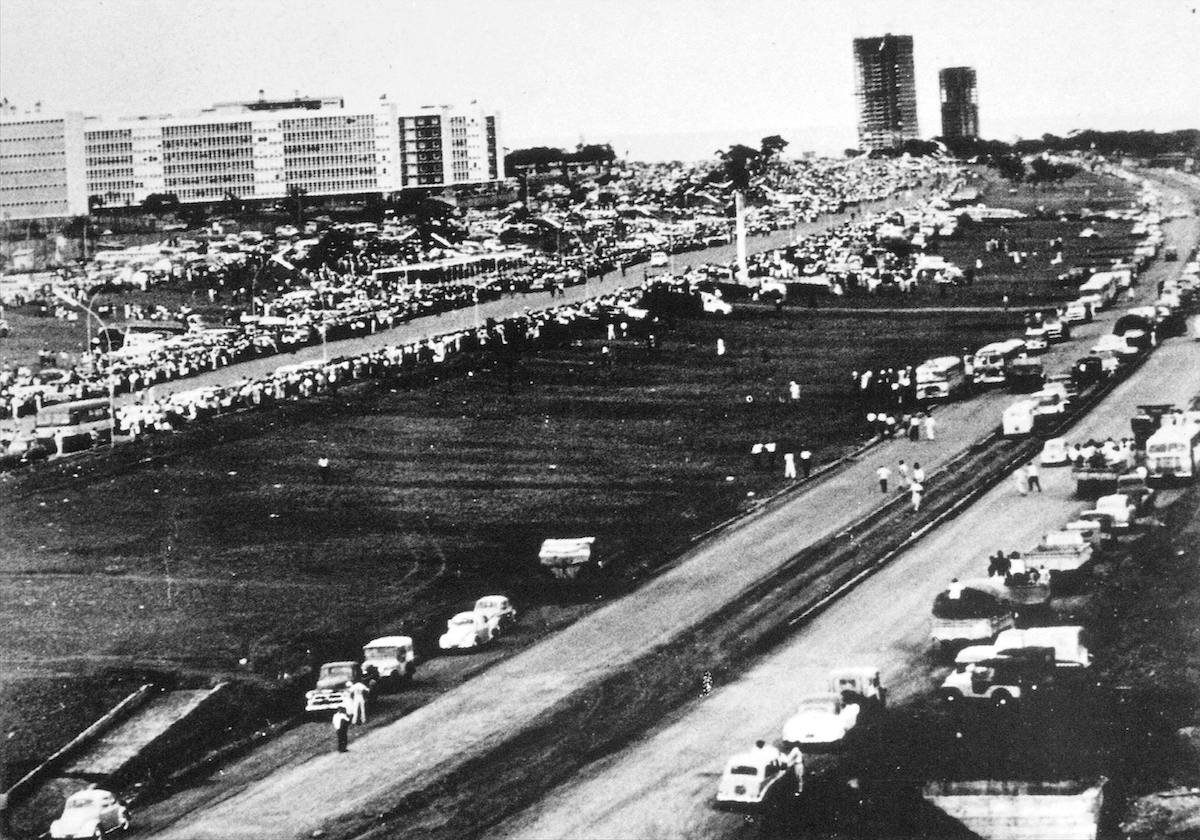
Lucio Costa: Central Axis, Brasília (1957-60), Archive photograph c. 1960.
There are three sets of highways here: the dual lane local parkway in the foreground, the large and undivided main highway in the centre, and a further dual lane local parkway beyond. This photograph shows the state of Brasília at its inauguration in 1960, with the six completed superquadras, very far from the 'completed city' that academics claim.
The link to the Parkways in Brasília is unambiguous: the roads in the lago sul and lago norte which run around the lake are known as Estradas Parques [Parkways]: the Estrada Parque Paranoa, Estrada Parque Peninsula Norte and the Estrada Parque Dom Bosco. The roads in the main axis, although not called parkways, are parkways in all but name.
What was New York like?
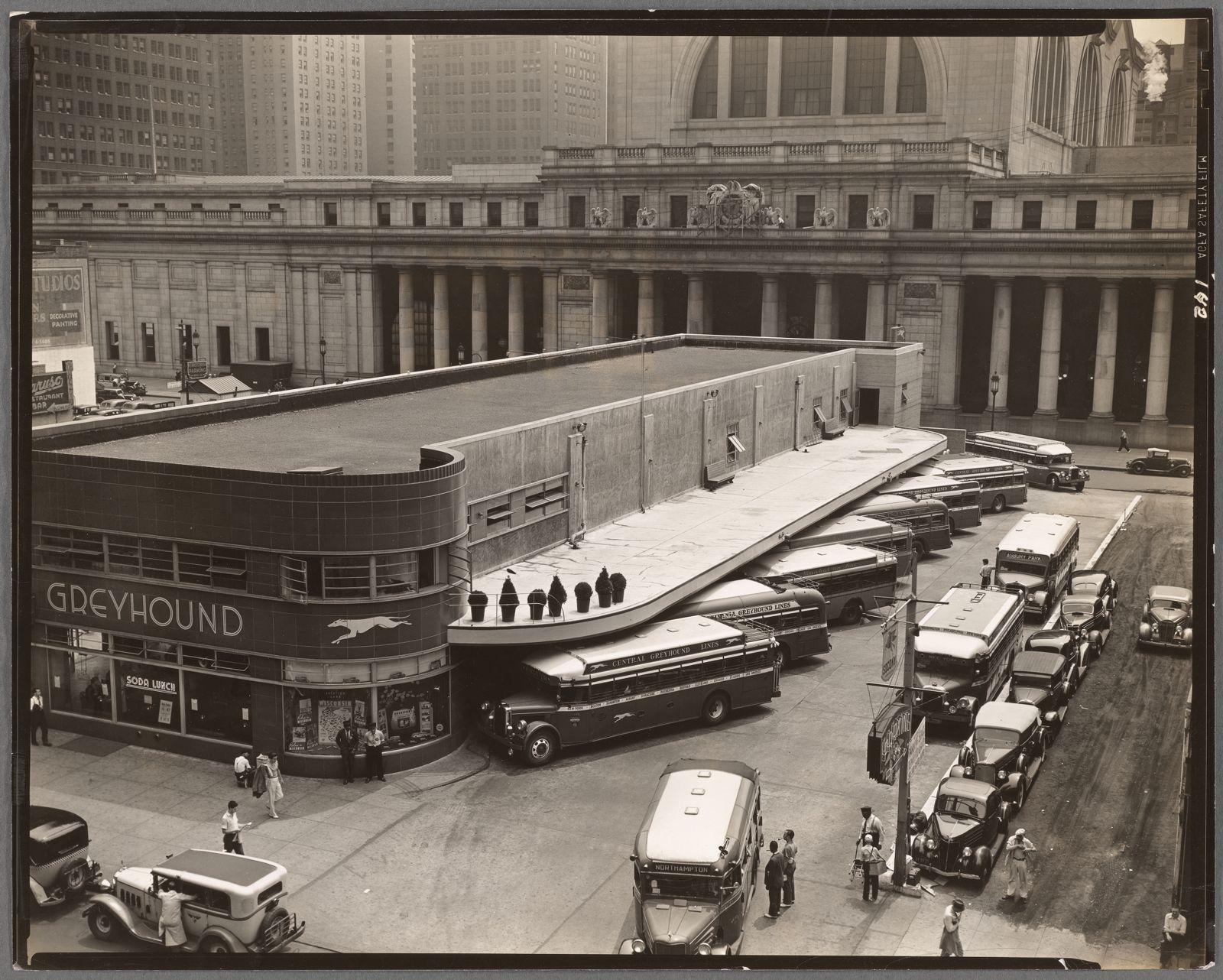
Berenice Abbott: Greyhound Bus Terminal (1936)
The Greyhound bus terminal was located in front of Pennsylvania Station, one of several masterpieces in the City by McKim Mead & White. We can be reasonably sure this was used by Costa as the bus station did not move to the Port Authority Terminal until 1963 when Pennsylvania Station began to be demolished.
The celebrated photographer Berenice Abbott produced an unique record of New York City as part of the Federal Art Project, a New Deal programme, from 1935 to 1939. This led to an exhibition "Changing New York" at the Museum of the City of New York in 1937 and book. Abbott had learned photography with Man Ray in Paris in the 1920s, as had, incidentally, another celebrated American photographer Lee Miller.
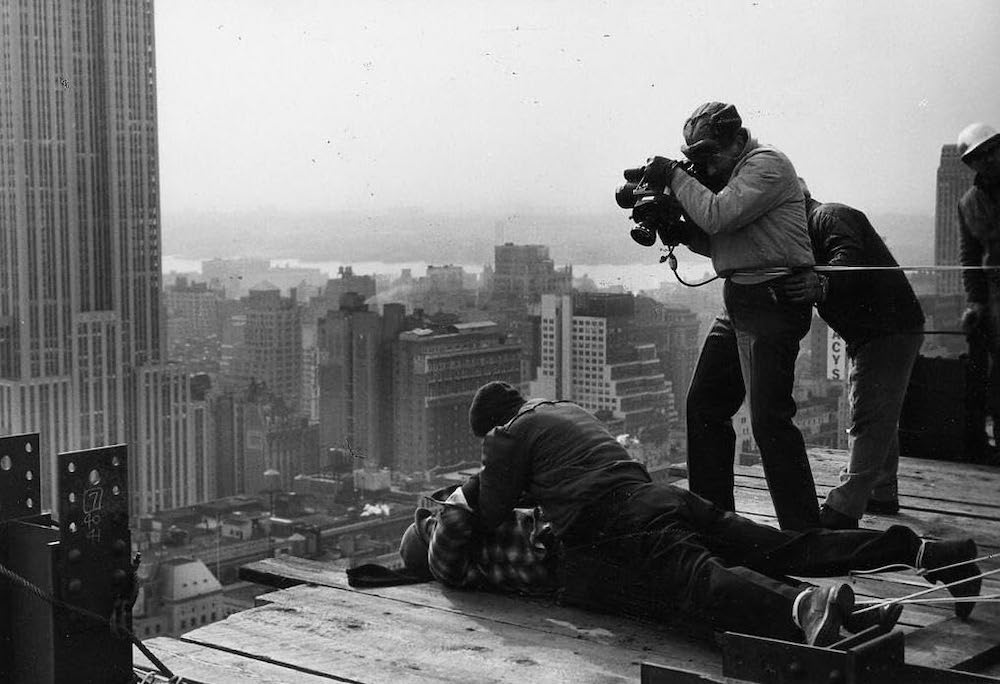
Jules Dassin: shooting 'The Naked City'
Jules Dassin had grown up in New York City. 'The Naked City' shows a city fundamentally different to today: women of all social classes in dresses and men (on both sides of the law) in suits walked densely occupied streets. The leisure-wear industry had not begun, a result, as Michael Johns notes in Moment of Grace: The American City in the 1950s, of suburbanisation.
Another source of what New York City looked like in the 1940s was a series of "film noir" shot on the city streets, by notable directors such as Robert Siodmak (Cry of the City, 1948), Fritz Lang (Scarlet Street, 1945) Jules Dassin (The Naked City, 1948) and Otto Preminger (Where the Sidewalk Ends, 1950). This small group of films mixed German Expressionist photography of heavy shadow and sharp compositional angles (many directors were in fact refugees from the Third Reich), contemporary Italian Neo-Realism of actual locations and everyday stories, with American crime fiction such as those by Raymond Chandler.
One reason that New York City was fundamentally different in 1956 was because it was a centre of industry: the garment industry reputedly employed one-third of the adult workforce. The predominance of the industry led to the first Zoning Acts in 1919, and the poor housing conditions of the workforce, mostly immigrants from eastern Europe, was a major factor in housing reform. Both zoning and housing reform were to have enormous impact on the future of cities worldwide. Lucio Costa saw the city at the apex of a spatial and economic partnership of labour and leisure that disappeared within a decade.
What did they wear?
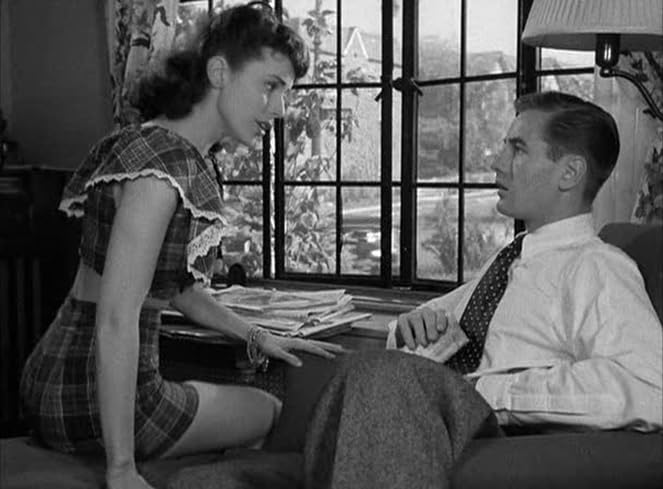
Jules Dassin: still from 'The Naked City'
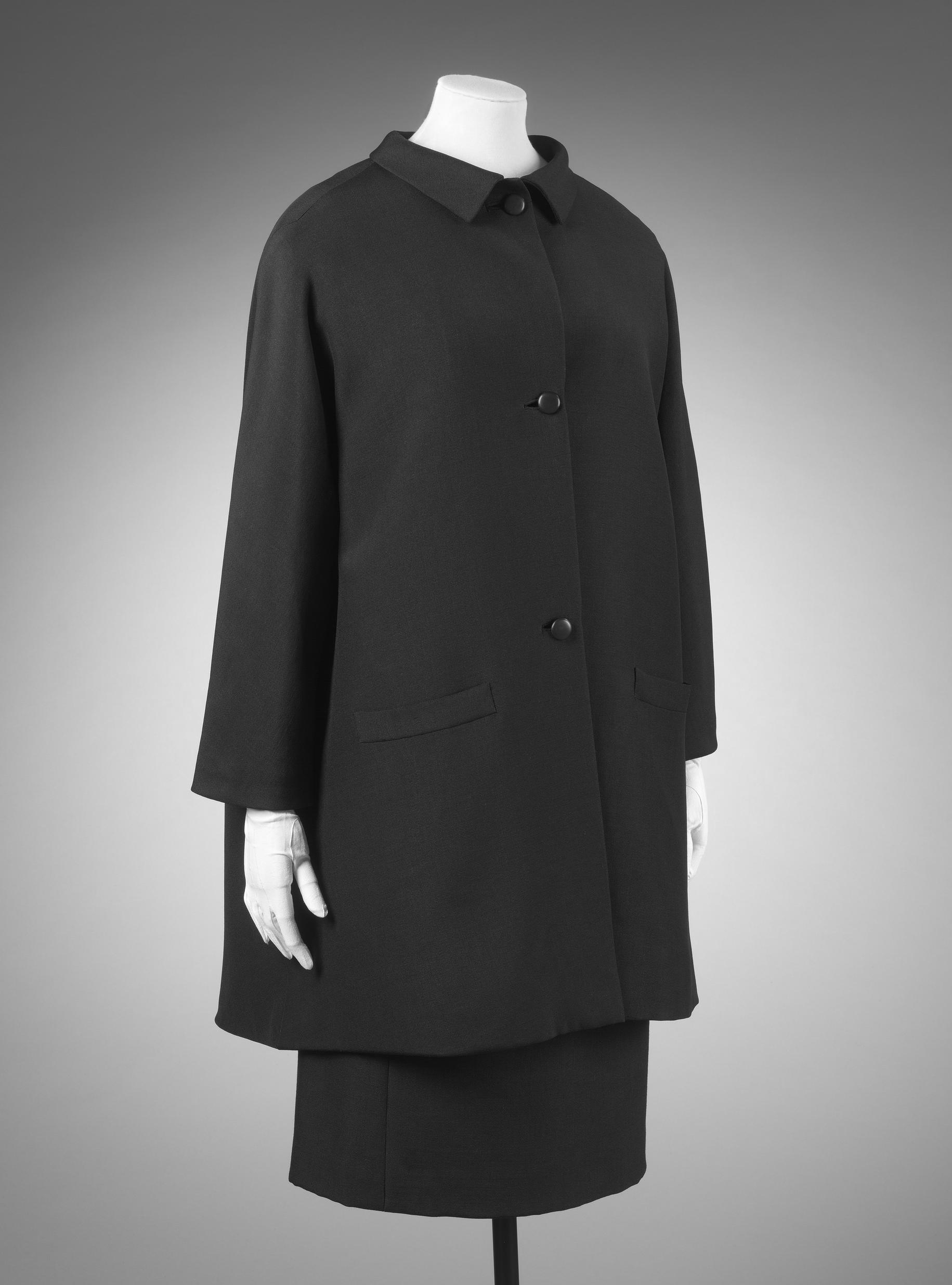
The heroine of 'The Naked City', Ruth Morrison (played by Dorothy Hart), is wearing a playsuit by, or copied from, the designer Claire McCardell. McCardell's simply-cut and unstructured designs revolutionised clothes for American women by by allowing elegant dressing for informal occasions. Her co-star Frank Niles (played by Howard Duff) is of course wearing a suit. Until the 'leisure-wear' revolution the design of clothes diffused down from great designers, with lower quality materials and cutting, through social classes, often through patterns from Butterick or Simplicity, and facilitated by local tailors and seamstresses or home Singer sewing machines.
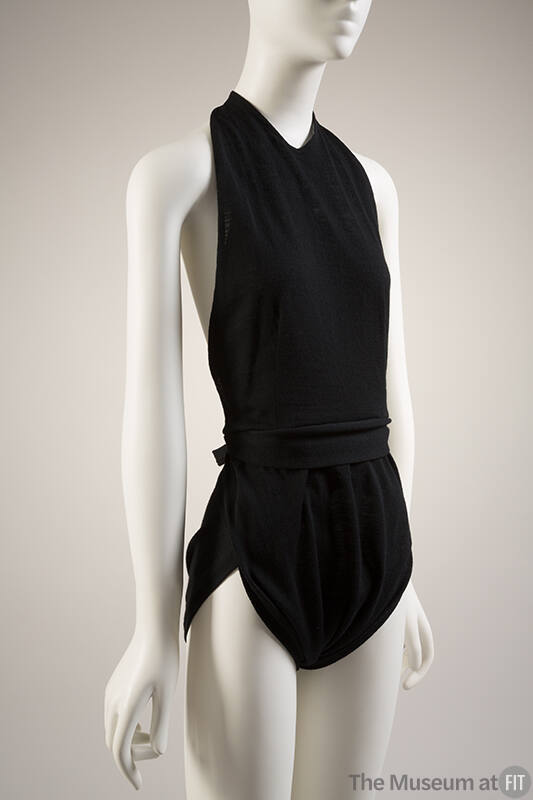
Claire McCardell: Swimsuit (1942)
Wool jersey and metal
Museum at the Fashion Institute of Technology Object Number 72.116.1
Image borrowed (unlicensed) from the Museum at the Fashion Institute of Technology, New York
Wool jersey and metal
Museum at the Fashion Institute of Technology Object Number 72.116.1
Image borrowed (unlicensed) from the Museum at the Fashion Institute of Technology, New York
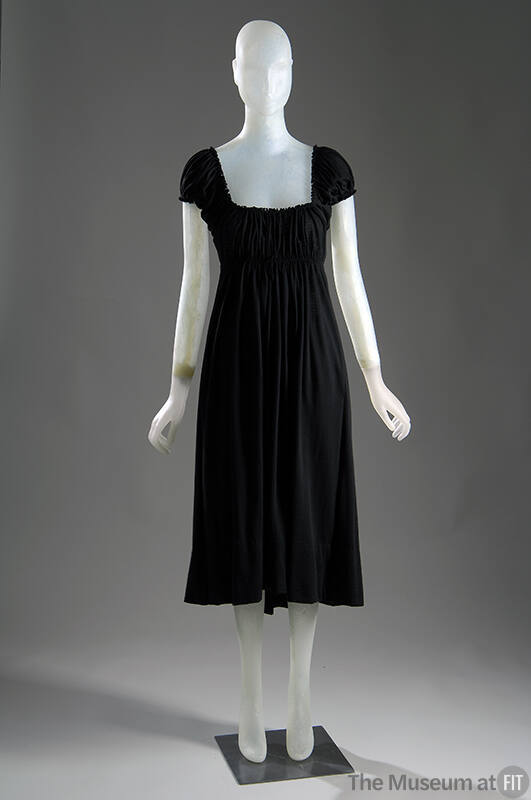
Claire McCardell: Dress (1946)br>
Black wool jersey
Museum at the Fashion Institute of Technology Object Number 76.33.17
Image borrowed (unlicensed) from the Museum at the Fashion Institute of Technology, New York
Black wool jersey
Museum at the Fashion Institute of Technology Object Number 76.33.17
Image borrowed (unlicensed) from the Museum at the Fashion Institute of Technology, New York
These superb clothes caught the spirit of Manhattan in 1945, a mixture of the sophisticated and casual. Although they are loosely called 'sportswear' they inhabit the same world of couture as her contemporaries Charles James and Madame Grès, with beautiful materials and clever cutting to accentuate elegance. To quote Jan Morris:
In 1945, New York City stood at the pinnacle of its cultural and economic power. Never again would the city possess the unique mixture of innocence and sophistication, romance and formality, generosity and confidence which characterized it in this moment of triumph. [9]
Why New York?
Academics and media, perhaps with ideologies to support or grant applications to prepare, love to attribute Brasília to CIAM or perhaps to the unbuilt projects for Stalingrad (1930) by Ivan Leonidov and Nicolai Miliutin. There is no evidence that by the 1905s Costa or Niemeyer retained any interest in the European Modernism that had been so important in the 1930s. Costa never mentioned it in his "Ingredientes" da concepção urbanistica de Brasília. He did mention Greyhound busses, which are a metonym for New York City at its peak. In fact the importance of CIAM was greatly exaggerated. Eric Mumford says:
Because CIAM deliberately encouraged the idea that it was a symbol of modern architecture and urbanism, its precise influence in the world of built artefacts is difficult to define. The early CIAM themes of the minimum housing unit, the rationally planned housing settlement, and the Functional City were not invented by CIAM, but were very successful efforts to more sharply delineate and promote directions already underway. Because of this, approaches to urban design with many similarities to “CIAM urbanism” can be found both before CIAM and in situations where CIAM influence is unlikely or clearly not present. [10]
Strange as it may seem, Brasília is an utopia, but an utopia not of European workers housing but of American idealism during the brief interlude, no longer than a few years, between the end of the Depression and the coming of World War II. For the designers of the New York Worlds Fair, the future was 1960; Brasília, ironically, was inaugurated on 21 April 1960.
Footnotes
1. ["Ingredients" of the urban concept for Brasília] in Lucio Costa: registro de uma vivencia [Lucio Costa: record of a lifetime] (Sao Paulo: Empresa das Artes 1995) ↩
2. Owen D. Gutfreund: "Rebuilding New York in the Auto Age: Robert Moses and his Highways" in Hilary Ballon and Kenneth Jackson (eds): Robert Moses and the modern city: the transformation of New York (New York: Norton 2007). The most well-known opposition came from Jane Jacobs, whose The Death and Life of Great American Cities: The Failure of Town Planning (Harmondsworth: Penguin 1965) was first published in 1961.↩
3. Pietro Maria Bardi: The Tropical Gardens of Roberto Burle Marx (Rio de Janeiro & Amsterdam: Colibris 1964). Construction of the aterro started in 1952. Norma Evenson: Two Brazilian Capitals (New Haven: Yale University Press 1973) p.68. This reason formed the first sentence of William Holford's article 'Brasília: a new Capital City for Brazil' in the Architectural Review (December 1957) p.395, as well as being cited by J. O. de Meira Penna in 'Brazil Builds a New Capital' in Brasília (Rio de Janeiro: Divisão Cultural, Ministério de Relações Exteriores c.1958), a catalogue published for an exhibition at the Institute of Contemporary Arts, London June 11-28 1958. ↩
4. Greg Hise: Magnetic Los Angeles (Johns Hopkins University Press 1997) p. 54. Hise was quoting from Joseph P. Cusker: 'The World of Tomorrow: Science, Culture and Community at the New York World's Fair' in Dawn of a New Day: The New York World's Fair, 1939-40 (New York University Press 1988) p.4. ↩
5. Alexander J. Field: A Great Leap Forward: 1930s Depression and U.S. Economic Growth (Yale 2011) p.312 ↩
6. Gail Radford: Modern housing for America: Policy struggles in the New Deal era (Chicago and London: The University of Chicago Press 1996) ↩
7. Michael Johns: Moment of Grace: The American City in the 1950s (University of California Press 2004) ↩
8. Lucio Costa: 'Memoria Descritiva do Plano Piloto' in Lucio Costa: registro de uma vivencia pp.283-95. Author's translation. Point 3.↩
9. Jan Morris: Manhattan '45 (Johns Hopkins University Press 1998) publishers blurb. ↩
10. Le Corbusier: La Ville Radieuse (Boulogne-sur-Seine: Editions de L'Architecture d'Aujourd'hui 1935). Eric Mumford: The CIAM Discourse on Urbanism, 1928-1960 (MIT 2002) p.267-8.
↩
Thomas Deckker
London 2026
London 2026